Manufacture: Novo Nordisk.
Semaglutide is a glucagon-like peptide-1 (GLP-1) receptor agonist indicated as an adjunct to diet and exercise to improve glycemic control in adults with type 2 diabetes mellitus.
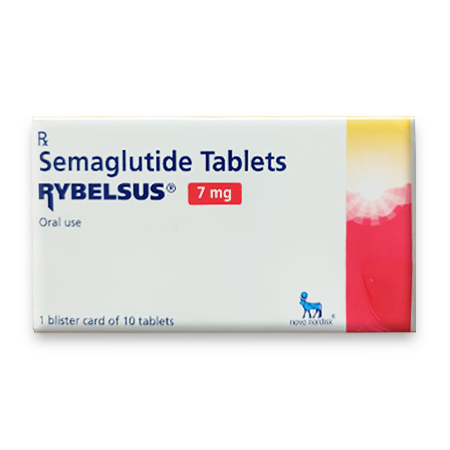
The image may differ from the actual product
Manufacture: Novo Nordisk.
Semaglutide is a glucagon-like peptide-1 (GLP-1) receptor agonist indicated as an adjunct to diet and exercise to improve glycemic control in adults with type 2 diabetes mellitus.
Description
Semaglutide is a GLP-1 analogue with 94% sequence homology to human GLP-1. Semaglutide acts as a GLP-1 receptor agonist that selectively binds to and activates the GLP-1 receptor, the target for native GLP-1. Semaglutide reduces blood glucose through a mechanism where it stimulates insulin secretion and lowers glucagon secretion, both in a glucose-dependent manner. Thus, when blood glucose is high, insulin secretion is stimulated and glucagon secretion is inhibited. The mechanism of blood glucose lowering also involves a minor delay in gastric emptying in the early postprandial phase.
Indication
Semaglutide is a glucagon-like peptide-1 (GLP-1) receptor agonist indicated as an adjunct to diet and exercise to improve glycemic control in adults with type 2 diabetes mellitus.
Limitations of Use
• Not recommended as first-line therapy for patients inadequately controlled on diet and exercise;
• Has not been studied in patients with a history of pancreatitis;
• Not indicated for use in patients with type 1 diabetes mellitus or treatment of diabetic ketoacidosis.
Dosage & Administration
Take Semaglutide at least 30 minutes before the first food, beverage, or other oral medications of the day with no more than 4 ounces (118 mi) of plain water only.
Starter Dose
Start Semaglutide with 3 mg once daily for 30 days.
Maintenance Dose
After 30 days on the 3 mg dose, increase the dose to 7 mg once daily.
For additional Glycemic control
If additional glycemic control is needed after at least 30 days on the 7 mg dose, the dose can be increased to 14 mg once daily.
Switching Patients between Semaglutide injection and Semaglutide tablet
• Patients treated with once weekly Semaglutide injection 0.5 mg subcutaneous injection can be transitioned to Semaglutide 7 mg or 14 mg tablet. Patients can start Semaglutide tablet up to 7 days after their last injection of Semaglutide injection. There is no equivalent dose of Semaglutide tablet for Semaglutide injection 1 mg;
• Patients treated with Semaglutide 14 mg tablet daily can be transitioned to Semaglutide subcutaneous injection 0.5 mg once weekly. Patients can start Semaglutide injection the day after their last dose of Semaglutide tablet.
Contraindications
• Personal or family history of medullary thyroid carcinoma or in patients with Multiple Endocrine Neoplasia syndrome type 2;
• Known hypersensitivity to Semaglutide or any the components of Semaglutide tablet.
Warnings & Precautions
• Pancreatitis: Has been reported in clinical trials. Discontinue promptly if pancreatitis is suspected. Do not restart if pancreatitis is confirmed.
• Diabetic Retinopathy Complications: Has been reported in a cardiovascular outcomes trial with Semaglutide injection. Patients with a history of diabetic retinopathy should be monitored.
• Hypoglycemia: When Semaglutide is used with an insulin secretagogue or insulin, consider lowering the dose of the secretagogue or insulin to reduce the risk of hypoglycemia.
• Acute Kidney Injury: Monitor renal function in patients with renal impairment reporting severe adverse gastrointestinal reactions.
• Hypersensitivity Reactions: Discontinue Semaglutide if suspected and promptly seek medical advice.
Adverse Reactions
The most common adverse reactions, reported in 5% of patients treated with Semaglutide are: nausea, abdominal pain, diarrhea, decreased appetite, vomiting and constipation.
Use in Specific Population
Pregnancy: Based on animal reproduction studies, there may be potential risks to the fetus from exposure to Semaglutide during pregnancy. Semaglutide should be used during pregnancy only if the potential benefit justifies the potential risk to the fetus.
Lactation: Breastfeeding not recommended.
Females and Males of Reproductive Potential: Discontinue Semaglutide in women at least before a planned pregnancy due to the long washout period for Semaglutide.
Pediatric Use: Safety and efficacy of Semaglutide has not been established in pediatric patients (younger than 18 years).
Geriatric Use: No overall differences in safety or efficacy were detected between these patients and younger patients, but greater sensitivity of some older individuals cannot be ruled out.
Renal Impairment: No dose adjustment of Semaglo is recommended for patients with renal impairment.
Hepatic impairment: No dose adjustment of Semaglutide is recommended for patients with hepatic impairment.
Drug Interaction
Concomitant use with an Insulin Secretagogue (e.g., Sulfonylurea) or with Insulin: The risk of hypoglycemia is increased when Semaglutide is used in combination with insulin secretagogues (e.g., sulfonylureas) or insulin. The risk of hypoglycemia may be lowered by a reduction in the dose of sulfonylurea (or other concomitantly administered insulin secretagogues) or insulin.
Oral Medications: Semaglutide causes a delay of gastric emptying, and thereby has the potential to impact the absorption of other oral medications. Levothyroxine exposure was increased 33% when administered with Semaglutide in a drug interaction study. Consider increased clinical or laboratory monitoring for medications that have a narrow therapeutic index or that require clinical monitoring.
Storage
Do not store above 25°C. Protect from light. Keep away from the reach of children.
All the information given above is a summary. You have to visit your doctor to get more information about this medicine. Do not share this product with the others who it was not prescribed for. Do not use this medication for other health conditions. Do not store it with an end term of its storage.