Indomethacin (Indostar-75) known as a nonsteroidal anti-inflammatory drug is used to relieve pain, swelling, and joint stiffness caused by arthritis, gout, bursitis, and tendonitis.
Indomethacin (Indostar-75)
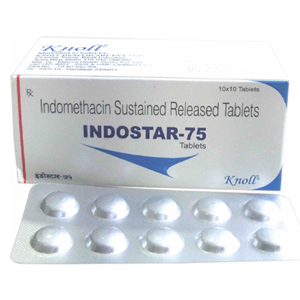
The image may differ from the actual product
Weight:
75 mg
Set:
30 tabs
Per pill price:
$3.50
Availability:
In stock
Price:
$105.00
WHAT INDOMETHACIN (INDOSTAR-75) IS AND WHAT IT IS USED FOR
Indomethacin (Indostar-75) belongs to the group of medicine known as nonsteroidal anti-inflammatory drugs and it is used for degenerative hip disease, ankylosing spondylitis, rheumatoid arthritis, to reduce swelling, muscular pain, low back pain, pain following bone or joint surgery, gout
and period pain.
WHAT YOU NEED TO KNOW BEFORE YOU TAKE INDOMETHACIN (INDOSTAR-75)
Do not take Indomethacin (Indostar-75) if you:
• think you are pregnant or you are planning to get pregnant or are breast feeding;
• have polyps in your nose, associated with itching, nettle rash, wheezing or swelling of the face, lips, tongue and throat. Difficulties in swallowing or breathing;
• are allergic to Indomethacin (Indostar-75) or any of the other ingredients in this medicine;
• are allergic (hypersensitive) to aspirin, ibuprofen or other NSAIDs;
• are taking other NSAIDs (e.g. Naproxen) including COX II inhibitors (e.g. Celecoxib);
• have, or have ever had, peptic ulceration (ulcer in your stomach or duodenum), or bleeding in your digestive tract, suffer from persistent stomach problem. Symptoms may include vomiting particles that look like coffee-grounds, black tarry stools and blood in your faeces;
• have severe liver, kidney or heart problems.
WARNINGS AND PRECAUTIONS
Talk to your doctor or pharmacist before taking Indomethacin (Indostar-75) if you:
• are epileptic, have Parkinson’s disease, psychiatric problem;
• have high blood pressure, heart disease or have tendency to fluid retention;
• are being treated for infection (or sepsis) or have a fever;
• suffer from asthma;
• suffer from any disease of the bowel such as Crohn’s disease or ulcerative colitis;
• currently have an infection (treated or not) or are receiving treatment with live vaccines;
• suffer with systemic lupus erythematosus (SLE) or any other connective tissue disorder;
• are due to have an operation;
• suffer from kidney or liver disease, diabetes or heart failure;
• have problem with blood clotting;
• have rheumatoid arthritis;
• have a bleeding or blood clotting disorder;
• have diabetes, suffer from peripheral arterial disease;
• have a decreased amount of fluid around the cells of the body (extracellular volume depletion);
• are allergic to Indomethacin (Indostar-75) or any of the other ingredients of this medicine.
If you are elderly or you have previously had stomach ulcers, you have a higher risk of getting side effects, especially from the stomach. Your doctor should therefore prescribe the lowest dose that gives you sufficient relief. If you experience any unusual symptoms from the stomach, you must tell your doctor about it.
Medicines such as Indomethacin (Indostar-75) may be associated with a small increased risk of heart attack or stroke.
Any risk is more likely with high doses and prolonged treatment. Do not exceed the recommended dose or duration of treatment.
If you have heart problems, previous stroke or think that you might be at risk of these conditions (for example if you have high blood pressure, diabetes or high cholesterol or are a smoker), you should discuss your treatment with your doctor or pharmacist.
Children: Indomethacin (Indostar-75) tablets must not be used in children.
OTHER MEDICINES AND INDOMETHACIN (INDOSTAR-75)
Tell your doctor or pharmacist if you are taking, have recently taken or might take any other medicines. Indomethacin (Indostar-75) tablets
may alter the results of some blood or urine tests. If you see another doctor or go in to hospital, let them know what medicine you are taking.
You should discuss the matter with your doctor if you are taking any of the following:
• aspirin or other non-steroidal anti-inflammatory drugs or diflunisal for pain relief;
• corticosteroids, which are drugs given to treat a variety of conditions such as allergies and hormone imbalance;
• anticoagulants such as warfarin to prevent blood clots;
• certain drugs for depression called selective serotonin reuptake inhibitors (SSRI);
• medicines such as acetylsalicylic acid to prevent platelet clumping;
• quinolone antibiotics (such as Ciprofloxacin);
• lithium or haloperidol (psychiatric medicines);
• antiviral medicines (such as Zidovudine or Ritonavir);
• Phenytoin (for epilepsy);
• Diazepam (for anxiety, difficulty sleeping, alcohol withdrawal, seizures and muscle spasm);
• medicines used to treat high blood pressure such as beta blockers (e.g. Atenolol), alpha blockers (e.g. Prazosin), ACE inhibitors (e.g. Lisinopril), angiotensin II receptor antagonists (e.g. Valsartan), Hydralazine or Nifedipine;
• Sulphonylureas (used to treat diabetes);
• cardiac glycosides (used to treat heart conditions e.g. Digoxin);
• Ciclosporin or Tacrolimus (immune system medicine), Methotrexate (used to treat some cancers, severe psoriasis and severe rheumatoid arthritis);
• Mifepristone (used to induce abortion);
• Desmopressin (for diabetes insipidus and frequent urination during the night);
• diuretics (water tablets) such as Triamterene, Thiazides (e.g. Bendroflumethiazide) or Furosemide;
• Baclofen (a muscle relaxant), Probenecid (for gout);
• Pentoxifylline (for blood vessel disease and leg ulcers);
• Tiludronic Acid (for Paget’s disease of bone).
If any of these applies to you, please tell your doctor immediately.
PREGNANCY, BREAST-FEEDING AND FERTILITY
Indomethacin (Indostar-75) Tablets may make it more difficult to become pregnant. If you are pregnant or breast-feeding, think you may
be pregnant or are planning to have a baby, ask your doctor or pharmacist for advice before taking this medicine.
DRIVING AND USING MACHINES
Indomethacin (Indostar-75) may cause dizziness, drowsiness, fatigue and visual disturbance are possible in some people, if it happens, do
not drive or operate machinery.
TESTS
Your doctor may want to carry out tests to monitor your kidney and liver function, the levels of blood cells and the effects on your stomach and intestines (especially if you are elderly). If you have or have had a history of high blood pressure or heart failure your doctor may also want to monitor you. If you have rheumatoid arthritis you may be advised to have regular eye tests to check your sight.
SURGERY
If you are about to have, or have recently had surgery, please contact your doctor before using this medicine.
HOW TO TAKE INDOMETHACIN (INDOSTAR-75)
Always take this medicine exactly as described by your doctor or pharmacist.
It is important to take your medicine with food or with an antacid; this will help you to prevent any stomach disturbance.
If you or anyone else has swallowed a lot of the capsules all together, contact your nearest hospital casualty department or doctor immediately. Take your medication with you.
IF YOU FORGET TO TAKE INDOMETHACIN (INDOSTAR-75)
If you miss one dose of your medicine, take one as soon as you remember unless it is nearly time to take the next one. Do not take a double dose to make up for a forgotten dose. Take the remaining doses at the correct time.
POSSIBLE SIDE EFFECTS
This medicine can cause side effects although not everybody gets them.
The most common side effects are headache, dizziness and indigestion.
Serious side effects
If you suffer from any of the following at any time during your treatment STOP TAKING the medicine and seek immediate medical help:
• pass blood in your faeces (stools/motions), pass black tarry stools, vomit any blood or dark particles that look like coffee grounds.
• allergic reactions - difficulty breathing or swallowing, asthma, sudden decrease in blood pressure, swelling of the face, lips, tongue or throat.
STOP TAKING the medicine and tell your doctor if you experience:
• indigestion or heartburn, abdominal pain (pains in your stomach) or other abnormal stomach symptoms.
• skin reactions such as itching, pale or red irregular raised patches with severe itching (hives), disorder characterised by blood spots, bruising and discolouring of the skin (purpura), blisters or skin that is red, flaky or peeling such as severe rash involving reddening, peeling and swelling of the skin that resembles severe burns (toxic epidermal necrolysis), circular, irregular red patches on the skin of the hands and arms (erythema multiforme), severe form of skin rash with flushing, fever, blisters or ulcers (Stevens Johnson syndrome).
• aseptic meningitis can occur in some patients. This may show combination of symptoms such as headache, fever, stiff neck and tiredness.
Medicines such as Indomethacin (Indostar-75) may be associated with a small increased risk of heart attack (“myocardial infarction”) or stroke.
Other side effects
If you experience any of the following other side effects contact your doctor or pharmacist:
1) Effects on the nervous system: fatigue, drowsiness, dizziness, headaches, convulsions, sleeplessness, fainting, coma, loss of sensation, lightheadedness, vertigo, tiredness, anxiety, speech problem, confusion, mental disturbances and rarely pins and needles, muscle weakness and
involuntary muscle movements.
2) Effects on the stomach, intestine and colon: abdominal pain or discomfort, loss of appetite, nausea, vomiting, constipation, diarrhoea, flatulence, inflammation of mouth or guts or worsening of these conditions and ulceration of intestine which can cause bleeding and worsening of ulcerative colitis and ulcer in and or bleeding from the gullet, inflammation of the pancreas causing pain and tenderness in the abdomen and back (pancreatitis), intestinal strictures and regional ileitis have been rarely reported.
3) Effects on the eye: pain in the eye or other vision disturbances, infrequently blurred or double vision.
4) Effects on the ear: ringing in the ear or other hearing disturbances (rarely deafness).
5) Effects on the blood: small purple red spots, nosebleeds, bruising, disorder characterised by blood spots, blood clotting throughout the body, disturbance of blood count, reduction in blood cell production by the bone marrow. If you notice increased bruising, nosebleeds, sore throats,
infections, excessive tiredness, breathlessness on exertion, or abnormal paleness of the skin, you should tell your doctor who may want you to have a blood test.
6) Effects on the heart: high or low blood pressure, increased or decreased blood pressure, increased or irregular heart rate, chest pain, heart failure and abnormal heart burn.
7) Effects on the liver: inflammation of the liver, jaundice (yellow skin or eyes).
8) Effects on the kidney: inflammation, disease or failure, blood or protein in the urine and increase in blood urea.
9) Effects on the skin: inflammation of blood vessels, sensitivity to sunlight or artificial light (e.g. sun beds), tender red lumps usually on the legs (erythema nodosum), hair loss, sweating, worsening of psoriasis (itchy scaly pink patches on the elbows, knees, scalp and other parts of the body.
10) Effects on reproductive system: bleeding from the vagina, breast enlargement or tenderness, enlarged breasts in men.
OTHER SIDE EFFECTS:
Increased level of sugar in the blood, high level of potassium in the blood.
HOW TO STORE INDOMETHACIN (INDOSTAR-75)
Keep this medicine out of the sight and reach of children.
This medicine should not be used after the expiry date stated on the pack.
Store it in a cool and dry place, below 30˚C.
Do not throw away any medicines via wastewater or household waste. Ask your pharmacist how to throw away medicines you no longer use. These measures will help protect the environment.
Please note all the information given above is a summary. You should visit your doctor, or health care provider to get more information about this medicine.